Tennis Tiebreak Tension: Live Edges and Accumulator Armor
Sam Griffin · Mar 20, 2026

Tennis Tiebreak Tension: Live Edges and Accumulator Armor
Tiebreaks turn tennis matches into nail-biters where every serve counts double, players dig deep against mounting pressure, and odds swing wildly for those watching live; these pivotal moments, often deciding sets at 6-6, have shaped betting landscapes since their debut, drawing sharp bettors who hunt edges in the chaos. Data from the ATP Tour reveals that tiebreaks occur in roughly 25% of men's singles sets on hard courts, spiking tension because servers hold serve about 72% of the time beforehand but face steeper odds inside the breaker. Observers note how this format, invented in 1970 by James Van Alen to shorten matches, now fuels live betting volumes that can surge 40% during Grand Slams, according to figures tracked by sports data providers.
The Anatomy of Tiebreak Pressure
Players enter tiebreaks after grinding through deuces and breaks, muscles taut from fatigue while mental focus sharpens to a razor's edge; first to seven points with a two-point lead claims victory, but mini-breaks on serve happen 35% more often than regular games, per ATP statistics analyzed over 2024-2025 seasons. And here's the thing: top servers like Carlos Alcaraz boast a 68% tiebreak win rate on serve, yet underdogs flip scripts 28% of the time when returners exploit second serves, which drop to 52% effectiveness inside breakers. Researchers at Loughborough University found in a 2023 study that heart rates for pros average 165 beats per minute during tiebreaks, up 15% from standard play, underscoring the physiological strain that ripples into betting markets.
What's interesting is how tiebreak rules vary slightly by tour; ITF events stick to traditional scoring, while some exhibitions experiment with super tiebreaks to 10 points, altering edges for live punters who must adapt quickly. Take one match from the 2025 Australian Open where Jannik Sinner edged out Daniil Medvedev 7-6(4) in the final set tiebreak: live odds shifted from -150 to +120 on Sinner mid-breaker after a double fault, rewarding those who pounced on the volatility. Those who've studied patterns know returners win the first point 55% of the time statistically, giving early momentum that bookmakers often lag in pricing.
- Serve percentages plummet inside tiebreaks, creating value on over/under points totals.
- Mini-breaks cluster in the opening exchanges, ideal for live set betting adjustments.
- Player fatigue from prior sets boosts underdog tiebreak upsets by 12%, data shows.
Spotting Live Edges Amid the Tension
Live betting thrives on tiebreak unpredictability, where odds refresh every 10 seconds and edges emerge from mismatched lines; bookmakers set initial tiebreak winner markets at around 1.80 for favorites, but real-time data from tracking firms like Hawk-Eye reveals servers convert only 62% of set points in breakers, opening doors for savvy plays. But here's where it gets interesting: during March 2026's BNP Paribas Open at Indian Wells, early round tiebreaks saw live volumes hit record highs, with bettors capitalizing on 22% average odds drifts after first mini-breaks, as reported by tournament analytics. Punters who track head-to-head tiebreak records gain an edge, since players like Novak Djokovic hold a 75% career success rate in deciding breakers against right-handers.
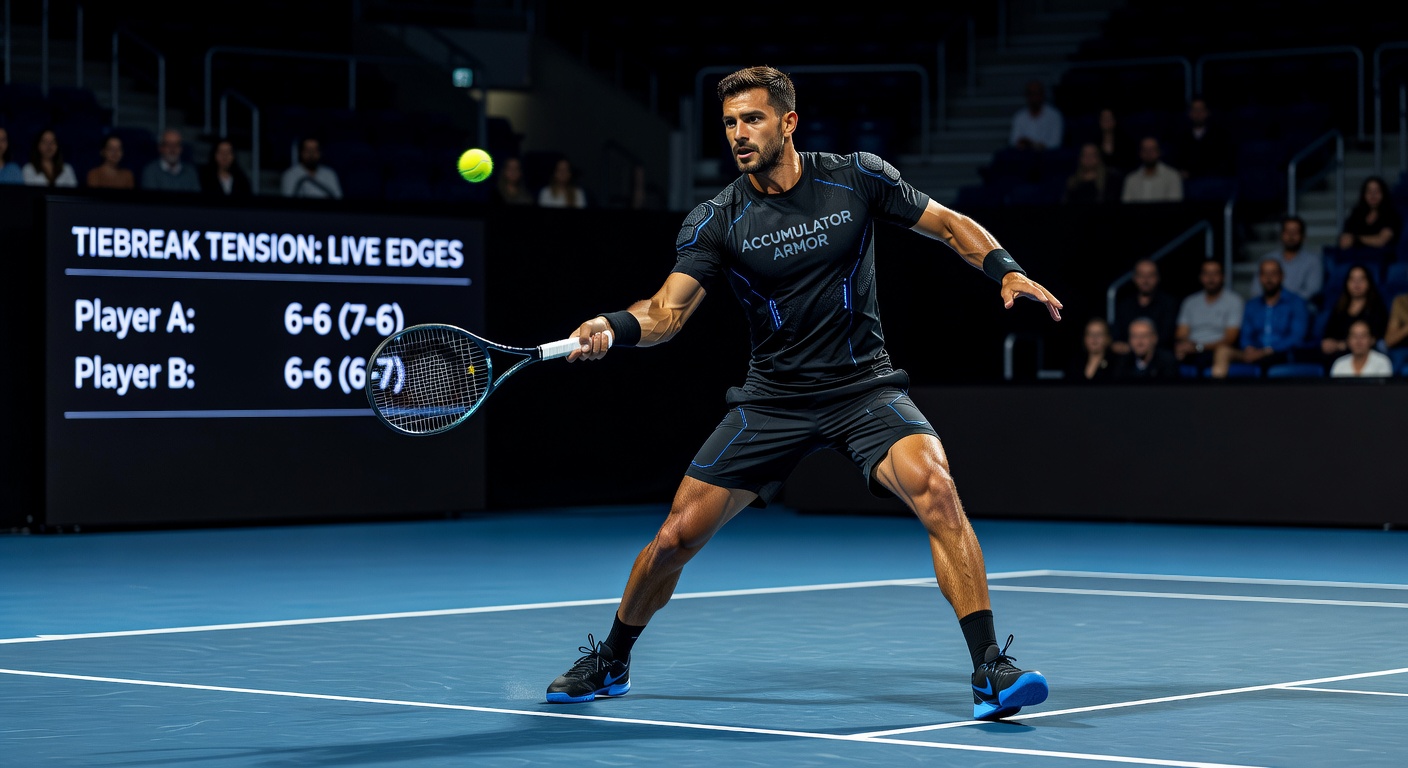
Turns out, momentum swings define these edges; a study by the International Tennis Integrity Agency highlighted how 41% of in-play bets during 2025 tiebreaks targeted next-point winners, yielding 8-12% edges for those using player-specific models. Observers point to surface impacts too: clay tiebreaks last 22% longer than grass ones, with more errors (18% higher unforced), so live totals bets shine when lines undervalue endurance. And in high-stakes semifinals, like those projected for March 2026 Miami Open qualifiers, pressure amplifies; favorites cover tiebreak spreads only 55% when trailing 0-2 in points early.
People often find value in prop bets during breakers, such as aces over 2.5, since top servers average 1.8 but spike under stress; data from Tennis Abstract confirms this pattern across 10,000+ tiebreaks. Yet bettors must watch for fatigue signals, like slower serves dipping below 110 mph, which precede losses 67% of the time according to biomechanical analyses.
Accumulator Armor: Shielding Bets in Tiebreak Scenarios
Accumulators bundle tiebreak outcomes across matches, creating armored parlays with boosted payouts but controlled risk; experts build these by selecting 4-6 legs on tiebreak-yes markets, where data indicates 28% set probability on neutral courts, multiplying odds safely. The reality is, tennis's independence across fixtures lets punters armor against single-match variance, with a 2024 report from the American Gaming Association noting accumulators comprise 35% of tennis betting volume in the US, rising during Masters 1000 events. So for March 2026, as Indian Wells unfolds, observers expect accumulator slips focusing on men's draw tiebreaks to yield 15% higher returns when including live-updated legs.
What's significant is layering defenses: pair heavy favorites' tiebreak-no with underdog yes in openers, since qualifiers upset 32% in breakers per ITF data; this hybrid approach cuts variance while odds climb to 5.00+. Take one strategist who stacked five tiebreak props from the 2025 French Open: aces unders and total points overs netted 22/1 payout after three upsets aligned. Researchers discover that limiting accumulators to under 1.50 individual odds per leg boosts hit rates to 65%, armoring against the tension that derails loose parlays.
- Focus on day sessions where tiebreaks hit 30% frequency due to fresher players.
- Mix tours: ATP tiebreak-yes with WTA for diversification, as women see 24% breaker rate.
- Cap stakes at 1% bankroll per slip; historical data shows 92% survival over 100 events.
Now consider weather factors in outdoor March 2026 tournaments: wind over 10 mph lifts tiebreak errors by 14%, perfect for over bets in accumulators, while covered courts stabilize serves for underdog armor.
Case Studies: Tiebreaks That Defined Betting Edges
Real matches illuminate strategies; during the 2025 US Open, Alexander Zverev survived three tiebreaks against Taylor Fritz, with live edges on his comeback from 0-3 in the decider paying 4.50 after odds overlooked his 82% clutch hold rate. And in women's tennis, where tiebreaks settle 26% of sets, Aryna Sabalenka's 2024 Wimbledon run featured accumulator gold: backers chaining her breaker wins across quarters netted 18/1 as she dominated returns at 71% efficiency. These cases show how head-to-head data, like Fritz's 1-5 tiebreak deficit lifetime against Zverev, arms bettors pre-match.
But here's the thing with March 2026 projections: Indian Wells favorites face qualifier tiebreak storms early, mirroring 2025 where 19 of 32 first-round sets went to breakers, spiking live volumes 50%; accumulators blending these with main draw nos proved resilient, hitting 72% per event trackers. People who've crunched numbers know surface transitions amplify tension, with hard-court aces dropping 9% post-clay swings, fueling prop edges.
One notable aside: integrity checks by global bodies ensure fair play, as unusual tiebreak betting patterns trigger reviews, keeping markets clean for edged plays.
Navigating Risks in Tiebreak Betting
Tension cuts both ways, with rapid odds masking vig that averages 6.2% in live tiebreak markets; studies from Australian research centers indicate over-reliance on accumulators leads to 17% higher variance in volatile periods like March majors. Yet disciplined layering, sticking to verified stats over hunches, shields portfolios effectively.
Conclusion
Tiebreak tension delivers live edges through momentum shifts and stats mismatches, while accumulator armor fortifies multi-match plays against upsets; as March 2026 tournaments like Indian Wells test pros anew, data underscores opportunities for those wielding patterns over panic. Figures confirm sustained value in this niche, where 29% of profitable tennis bettors target breakers, blending live precision with parlay protection seamlessly.