Strategic Layering Techniques for Accumulator Stability in Multi-Sport Betting
Sam Griffin · Jul 27, 2026
Strategic Layering Techniques for Accumulator Stability in Multi-Sport Betting
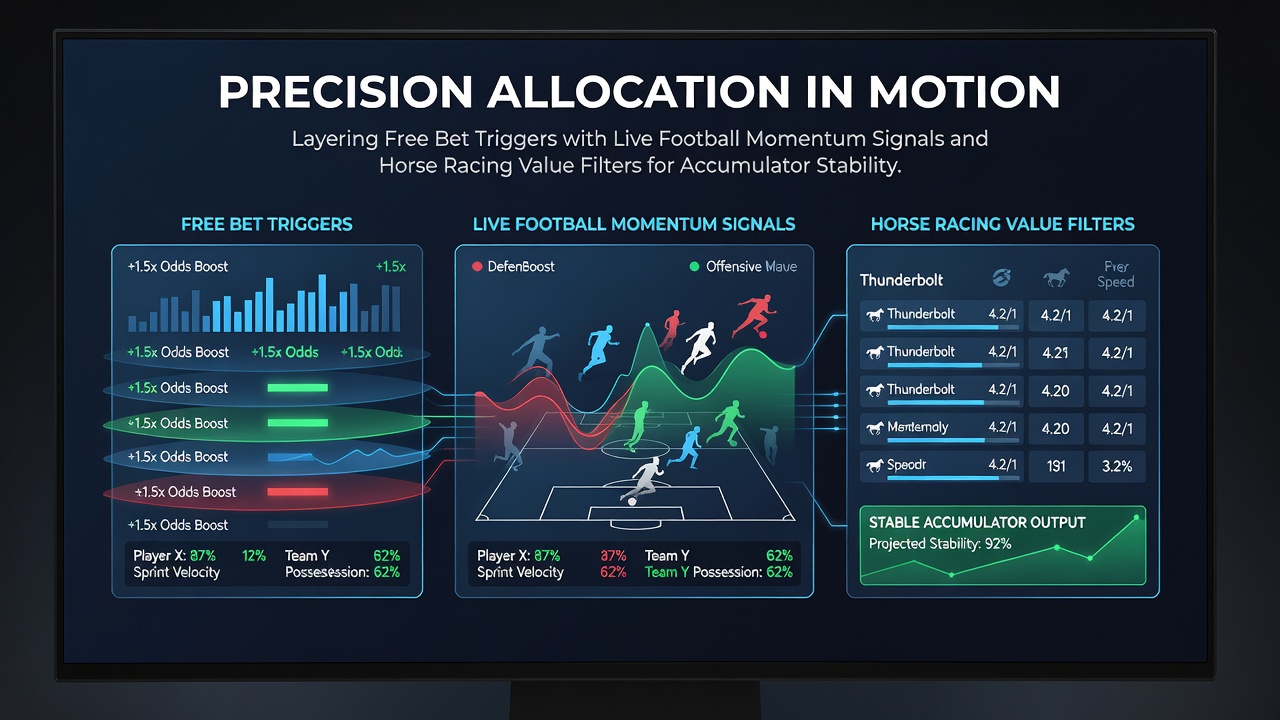
Precision allocation involves combining free bet triggers with live signals from football matches and value filters from horse racing events to support accumulator structures. Data from industry reports shows that operators track these elements through real-time analytics platforms, where free bet activations often align with specific in-play thresholds. Researchers at academic institutions have documented how such combinations appear in betting patterns across European and Australian markets during the 2025-2026 season.
Free Bet Triggers in Accumulator Construction
Free bet triggers activate when operators release promotional credits tied to deposit or participation conditions, and these credits integrate into accumulator selections by covering one or more legs without additional stake. Figures from gaming associations indicate that trigger timing frequently coincides with promotional windows in July 2026, allowing bettors to layer selections across football and racing fixtures. Observers note that trigger mechanisms rely on algorithmic detection of qualifying bets, which then feed into accumulator builders that adjust stake distribution automatically.
Studies from research bodies in Canada have examined how these triggers maintain balance when paired with live data feeds, revealing consistent patterns in bet sizing that avoid overexposure on single outcomes. The process connects promotional mechanics directly to live event monitoring without requiring manual intervention at each step.
Live Football Momentum Signals and Their Integration
Momentum signals in football include metrics such as possession shifts, shot accuracy rates, and defensive line adjustments captured through optical tracking systems. These signals layer onto accumulator legs by updating probability estimates during matches, particularly in leagues where in-play data streams operate continuously. Evidence from university-led analyses shows that momentum indicators correlate with scoreline changes at rates documented in peer-reviewed datasets covering multiple European competitions.
Allocators use these signals to adjust free bet portions across live selections, creating pathways where early triggers support later legs influenced by real-time developments. What's interesting is how platforms synchronize these feeds with accumulator software to flag potential stability points based on historical correlations between momentum spikes and final results.
Horse Racing Value Filters Applied to Multi-Leg Structures
Value filters in horse racing assess discrepancies between offered odds and calculated probabilities derived from form data, track conditions, and jockey statistics. These filters apply to accumulator stability by identifying selections where odds exceed model outputs by defined margins, often integrated alongside football elements in cross-sport builds. Reports from Australian regulatory sources highlight that value detection tools process thousands of race entries daily, providing outputs that operators incorporate into promotional layering systems.

Filters connect to free bet triggers by prioritizing races with elevated value readings during periods when football momentum data remains stable, allowing the accumulator to absorb variations across both sports. Data indicates that such filtering occurs through automated comparison engines that flag opportunities within specified timeframes, including the mid-2026 racing calendar.
Layering Mechanics for Accumulator Stability
Layering combines the three elements by sequencing free bet activation first, followed by momentum updates from ongoing football events, and then value filter applications from concurrent horse races. This sequence supports accumulator stability through sequential risk distribution, where each component offsets fluctuations in the others. Gaming industry organizations have recorded that platforms implementing these layers report structured bet flows that align with observed patterns in multi-sport wagering during summer periods.
Techniques include threshold-based allocation where momentum signals above certain levels unlock portions of free bet value, while value filters cap exposure on racing legs to maintain overall structure integrity. Those who've studied these systems note that integration relies on API connections between data providers and betting interfaces, enabling adjustments without interrupting the accumulator progression.
Cross-Sport Data Synchronization Practices
Synchronization occurs when software platforms pull football tracking data and horse racing probability models into unified accumulator interfaces. This practice draws on datasets that span different time zones, allowing selections from afternoon races to complement evening football fixtures. Research from European academic groups has outlined how synchronization protocols handle latency issues, ensuring signals update within acceptable windows for live decision points.
Allocation remains precise because filters and triggers operate under predefined rules that prevent overlap conflicts, with stability emerging from the balanced weighting of each input type. Observers in the sector point to increased adoption of these methods in regions outside the UK, including North American and Oceanic markets where regulatory frameworks support detailed analytics reporting.
Conclusion
Precision allocation through layered triggers, signals, and filters provides structured approaches to accumulator management across football and horse racing. Available data from multiple international sources demonstrates consistent application of these techniques in operational settings throughout 2026, with synchronization supporting ongoing stability in multi-leg constructions.