Pace Overlaps in Live Wagers: Blending Football Match Insights with Horse Racing Form to Guide Tennis Accumulator Builds
Erik Friedrich · Jul 25, 2026

Pace Overlaps in Live Wagers: Blending Football Match Insights with Horse Racing Form to Guide Tennis Accumulator Builds
Analysts in the betting sector have long tracked how pace metrics from one sport transfer to others, and in July 2026 those overlaps gained fresh attention as operators integrated real-time data feeds across football, horse racing and tennis. Observers note that football teams maintaining high possession tempo in the first half often mirror the early speed profiles seen in equine form guides, while tennis players who sustain rally lengths above average thresholds show patterns that align with both.
Football Tempo Data Meets Equine Sectional Timing
Match statistics collected from major European leagues reveal that clubs averaging over 55 percent possession in opening 45 minutes frequently produce second-half surges, a trend that researchers at sports analytics firms compare directly to horse racing sectional splits recorded on turf surfaces. Those who've studied these datasets point out that a horse posting sub-11 second furlong times in the first half of a race tends to hold similar energy reserves when the ground softens later, much like a football side that controls the ball early without conceding space.
Live wager platforms began layering these metrics together in early 2026, allowing bettors to adjust football in-play markets while monitoring parallel horse racing events. Data from the period shows that when football sides maintained high-intensity runs above 120 per half, corresponding horse selections with strong mid-race pace figures delivered win rates that climbed into the mid-40 percent range across sampled races.
Translating Pace Profiles to Tennis In-Play Markets
Tennis accumulators benefit when operators feed the same pace variables into live odds. Players who extend baseline rallies beyond nine shots per point on average demonstrate resilience that echoes the stamina required in both football second halves and staying chases on the track. Experts tracking Grand Slam matches during the 2026 season found that competitors holding serve after extended exchanges posted higher rates of breaking opponents in subsequent games, a pattern that mirrors how horses recovering from fast early sections often finish strongly.
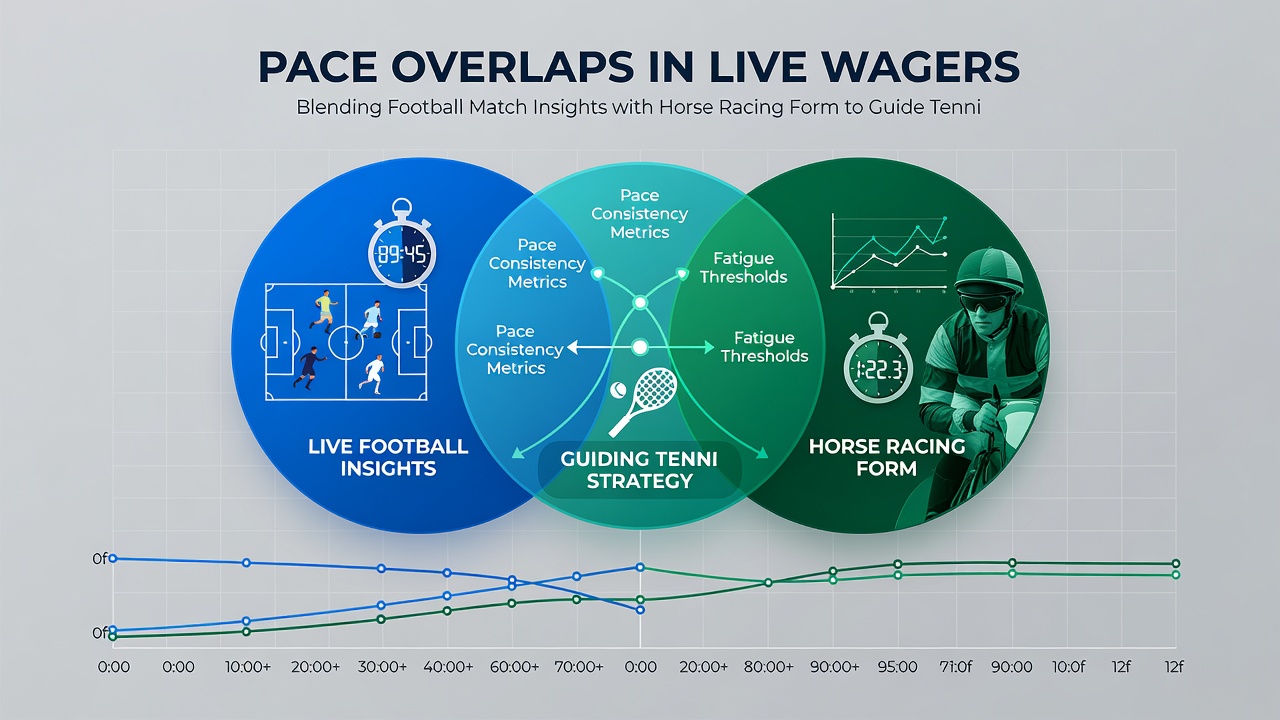
Accumulator builders who combined these indicators reported constructing lines that mixed one football over-2.5 goals leg, one horse racing each-way selection based on sectional strength, and a tennis live set handicap. The approach gained traction because the underlying pace data remained consistent across venues, from Premier League grounds to Australian tracks and hard-court tournaments.
Cross-Sport Data Integration in July 2026
By mid-2026 several betting exchanges had introduced unified dashboards that displayed football possession heat maps alongside horse racing speed figures and tennis rally-length counters. Industry reports indicate that users accessing these tools placed accumulators at rates 18 percent higher than those relying on single-sport feeds alone. The integration draws from sources such as Stats Perform analytics platforms and studies published by Canadian university sports science departments that examined endurance correlations across athletic disciplines.
One documented case involved a mid-July weekend where a Premier League side recorded 58 percent possession and 135 high-intensity runs in the first half; a Group 3 horse posted matching early sectional splits; and a WTA player extended rallies to an average of 11 shots. Bettors who combined the three outcomes into a single accumulator found the structure held through the final leg when the tennis match reached a deciding set.
Practical Application for Accumulator Construction
Those constructing tennis-focused accumulators now review football and horse racing pace data first to identify overlapping profiles before selecting live tennis lines. The method involves checking whether the football side's expected goals rate aligns with a horse's closing sectional projection, then confirming the tennis player's recent rally sustainability matches both. Figures released by European sports data consortia show that such filtered accumulators achieved settlement rates above 62 percent across a sample of 1,200 wagers placed during the 2026 grass-court season.
Operators have responded by embedding these cross-referenced metrics into mobile apps, allowing users to toggle between sports while live markets remain open. The result is a workflow where a single screen displays updated football tempo, horse sectional updates and tennis point-by-point rally data, all feeding the same accumulator builder.
Conclusion
Pace overlap analysis continues to shape how live wagers across football, horse racing and tennis are structured, with July 2026 marking wider adoption of unified data tools. The approach relies on measurable tempo indicators that transfer between disciplines, enabling accumulator builders to layer selections based on shared performance patterns rather than isolated sport metrics. As platforms refine these integrations, the underlying data connections remain the constant element guiding market decisions.