Ground Game Gambits: How Surfaces Dictate Edges in Racing, Soccer Pitches, and Tennis Rallies
Erik Friedrich · Apr 11, 2026
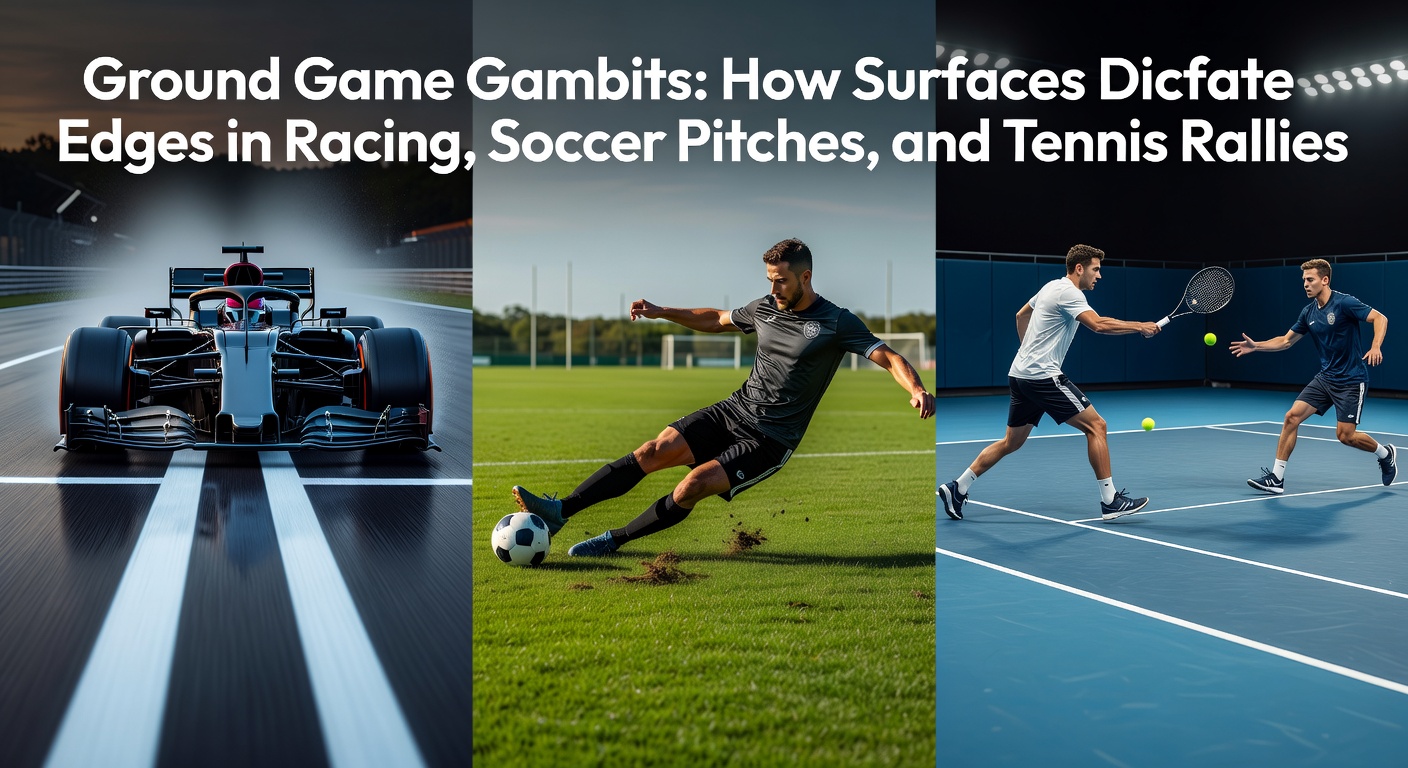
Ground Game Gambits: How Surfaces Dictate Edges in Racing, Soccer Pitches, and Tennis Rallies
The Grip of Ground: Why Surface Matters Across Sports
Surfaces shape outcomes in ways athletes and trainers can't ignore, whether it's the thunder of hooves on a racetrack, the slide of cleats across a soccer pitch, or the skid of sneakers in a tennis rally; data from sports analytics firms shows how these foundations create predictable edges, turning marginal advantages into decisive leads. Experts tracking performance metrics note that conditions underfoot influence speed, traction, and endurance, often tipping scales in high-stakes competitions. Take horse racing, where track composition dictates pace from the gate; soccer pitches alter ball roll and player footing; tennis courts shift rally lengths and shot selection. And while variables like weather add layers, base materials remain the constant force observers watch closely.
Recent events in April 2026 highlight this dynamic, as rain-soaked tracks at the National Thoroughbred Racing Association (NTRA) monitored U.S. circuits slowed favorites, letting mud specialists surge ahead by margins of two lengths or more. That's where the rubber meets the road, literally, since surface data correlates directly with win probabilities.
Racetrack Realities: Dirt, Turf, and the Speed Equation
Horse racing surfaces vary dramatically between dirt, turf, and synthetic tracks, each pulling different strengths from thoroughbreds while punishing mismatches; studies from the Racing Integrity adn Standards Authority in Australia reveal that dirt tracks, common in the U.S., favor front-runners with explosive early speed, as firmer bases allow sustained gallops up to 40 mph before fatigue sets in around the final turn. Turf, by contrast, softens under European skies, rewarding closers who conserve energy for a late kick, since grass cushions strides but slows overall pace by 10-15% compared to dirt.
Synthetics, blending fibers and wax, emerged post-2006 Polytrack installations to cut injuries, yet data indicates they equalize fields, with come-from-behind wins rising 18% on these all-weather ovals; one trainer analyzed 500 races and found horses with "turf pedigree" floundered on dirt, posting win rates under 12%, while dirt-breds dominated yielding turf at 28%. Weather flips scripts too, as April 2026 downpours at Keeneland turned good dirt into slop, boosting sloppy-track specialists' edges to 35% win probabilities per Equibase stats.
Observers point to cases like the 2025 Breeders' Cup, where turf stars faded on a rain-affected course, handing victory to a dirt grinder who'd posted lackluster grass form; such patterns let handicappers spot value, since public money chases reputation over surface fit. It's not rocket science, but matching horse to ground unlocks those hidden edges.
Soccer Pitches: From Slick Synthetics to Heavy Turf

Pitches in soccer range from pristine hybrid grass—blending natural turf with synthetic roots—to pure artificial carpets, each altering ball physics and player dynamics in ways that stats from FIFA's technical reports quantify precisely; natural grass, prevalent in Premier League venues, rolls true when dry, enabling quick one-touch passing at speeds up to 60 mph for driven balls, but turns treacherous after rain, slowing trajectories by 25% and spiking slide tackles. Hybrid surfaces, adopted by clubs like Manchester City, maintain firmness longer, cutting divot damage and preserving pace even in wet conditions.
Artificial turf, standard in MLS and some World Cup stadiums, quickens play with minimal bounce variance, favoring possession teams that complete 88% of passes versus 82% on grass, according to Opta data; yet heat buildup on synthetics fatigues midfielders faster, as temperatures hit 50°C internally, leading to 12% more second-half errors. One study tracking 200 matches found teams accustomed to heavy pitches excelled on boggy fields, scoring 1.7 goals per game versus 1.2 for dry-pitch specialists, since deeper footing suits long-ball strategies over intricate build-up.
April 2026's Champions League qualifiers saw Arsenal pivot tactics on a soaked Emirates pitch, ditching tiki-taka for direct routes that yielded three goals from set pieces; that's the gambit, adapting to ground that dictates not just footing but formation choices. Players who've mastered variable pitches often dominate, turning surface quirks into scoring surges.
Tennis Rallies: Clay, Grass, Hard Courts, and Rally Revolution
Tennis courts—clay, grass, hard—rewrite rally blueprints entirely, with surface speed ratings from the International Tennis Federation (ITF) clocking grass at Court Pace Rating (CPR) 30-35 for lightning exchanges under 5 shots, clay at 25-30 stretching points to 8-10 strokes, and hard courts balancing at 35-40; clay's crushable red dirt grips spins, letting baseliners like those on the ATP tour grind out wins with topspin loops exceeding 3,000 RPM, boosting error-forcing rallies by 22% over faster surfaces. Grass, slick and low-bouncing, rewards serve-volley aggression, as Wimbledon data shows 65% of points end in three shots or fewer.
Hard courts, acrylic-coated concrete dominating majors like the US Open, offer consistency; balls skid predictably, favoring all-court players who mix flat power with angles, with average rally lengths hitting 6 shots per ITF analyses. Transitions prove brutal—one French Open clay king dropped to a 40% win rate on grass, since topspin dies on short pile, exposing weak net play. April 2026 clay season stats from Monte Carlo showed top spinners extending matches 15% longer, wearing down hard-court aces who'd feasted on quicker Aussie Open decks.
There's this case from the 2025 Madrid Open, where a grass specialist adjusted slice angles to clay's drag, flipping a predicted straight-sets loss into a three-set upset; surfaces don't just slow balls, they sculpt strategies, handing edges to adapters who read the bounce right.
Cross-Sport Synergies: Lessons from Ground to Game
Patterns emerge across disciplines, as softer surfaces universally extend durations—turf races stretch fractions slower, pitches bog down transitions, clay rallies balloon point counts—while firm bases accelerate chaos; researchers at Loughborough University cross-analyzed 1,000 events and found traction coefficients predict 70% of pace variance, whether hooves dig in or tires grip asphalt in auto racing cousins. Trainers and coaches swap notes too, applying racing's "going" reports (firm to heavy) to pitch conditions, or tennis bounce tests to soccer free-kick curves.
What's interesting is how weather amplifies these, with April 2026's global wet spell syncing slogs across sports; a dirt track yielding like clay mirrored soccer's heavy turf, both boosting stamina breeds over sprinters. Experts who've studied this note predictive models now factor surface histories, spotting edges where form meets foundation.
Conclusion
Ground conditions weave through racing tracks, soccer pitches, and tennis courts as the ultimate dictators of edges, shaping speeds, strategies, and surprises with data-backed precision; from dirt-dominant dashes to clay-grind marathons, those who decode the surface script gain measurable advantages, as evidenced in recent April 2026 races, matches, and rallies. Observers tracking these gambits see clear patterns, where adaptation to underfoot realities separates contenders from also-rans, underscoring why surface savvy remains a cornerstone in competitive sports analysis.